‘I was tortured and lost my hand’ – one student’s struggle to get an education in Nigeria
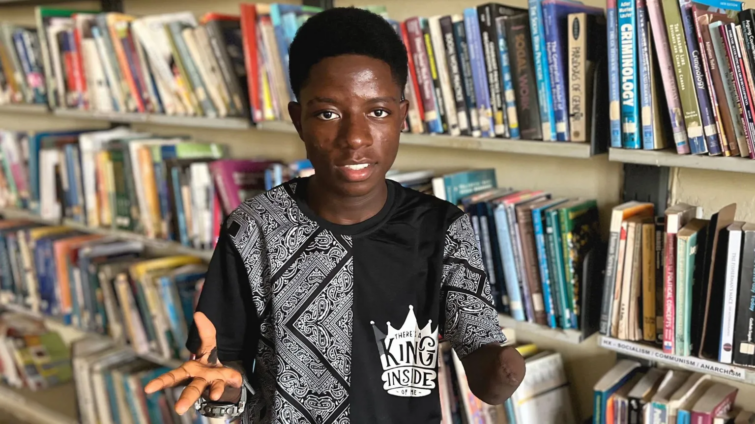
At the age of 13, Ovey Friday was accused of witchcraft by his stepmother and taken to a traditional shrine in the central Nigerian state of Nasarawa, where he was tortured.
By the time a neighbour alerted police, and he was taken to hospital, the damage was irreversible.
“The herbalist brought charcoal, put something on my hands, tied my hands [along] with my leg, put pepper there inside the charcoal, then covered me with a bedsheet,” recalls Friday, now aged 19.
Doctors were forced to sedate him and operate on him. Friday woke up to find his left hand amputated, while the fingers on his right hand were either amputated or permanently scarred.
“I cried, and I cried,” Friday tells the BBC.
In the years that followed, people stared at him on the streets or taunted him.
“I wish they knew me, like, when I was born,” he says.
Alongside his grief was a steely determination to keep going.
Yet his academic ambitions were nearly interrupted two years ago, when he tried to sit Nigeria’s university entrance examination, run by the Joint Admissions and Matriculation Board (JAMB).
The system’s biometric fingerprint process could not accommodate someone like him, as it could not capture his scarred thumbprint or the prints of the other two scarred fingers.
Thankfully, he got lucky as one of his guardians, along with disability rights campaigners, pushed officials to accept his toe print as verification of his ID.
Friday is now studying English and literary studies at a university in Nasarawa, a state which borders the capital, Abuja.
He is the first in his family to enrol at university.
“Not everyone has someone to push for them,” he says. “Some people will just stop trying,” Friday says.
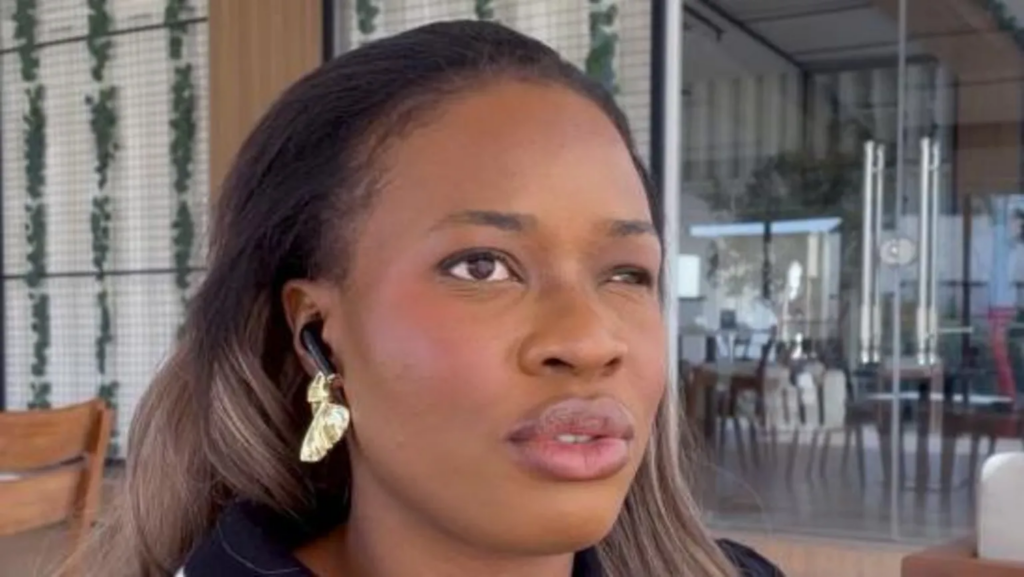
Scarlett Eduoku, a radio presenter in the northern state of Kano, has faced similar obstacles and says most identity verification apps fail to scan her face. She lost her left eye when she was 18 months old.
This is a constant headache and also means she could not upgrade her SIM card from 3G to 5G remotely.
Instead, she had to travel to the headquarters of her phone provider in Kano’s city centre.
More than 35 million Nigerians, roughly 15% of the population, are estimated to live with some form of disability, according to the executive secretary of the National Commission for Persons with Disabilities (NCPWD), Ayuba Burki-Gufwan.
Landmark legislation was passed by parliament in 2019, prohibiting discrimination against disabled people and guaranteeing them access to public services.
The legislation led to the establishment of the NCPWD to advocate for their rights, but change has been “more or less at snail’s speed”, Burki-Gufwan tells the BBC.
He remains optimistic, however, saying that “the journey of a thousand miles begins with a step”.
Burki-Gufwan points to some gains – Jamb has dropped examination fees for people with disabilities and has created dedicated centres for students with different needs.
A university in Nasarawa, the Federal University of Lafia, has also waived up to 75% of all fees for students living with disabilities.
“All of a sudden, the university witnessed a huge upsurge [in enrolment],” Burki-Gufwan says, “because every person with a disability wanted to benefit.”
Lagos-based special educator Chukwuemeka Chimdiebere says Nigeria has to step up efforts to address the needs of disabled people.
“Inclusion is not a favour. It is a responsibility,” he tells the BBC.
Accessibility, he explains, goes far beyond things like building ramps.
It means sign-language interpreters in classrooms, learning materials for visually impaired students, trained teachers and digital platforms designed with different users in mind.
“Many persons with disabilities are not limited by their impairment. They are limited by systems that were never designed with them in mind,” Chimdiebere says.