


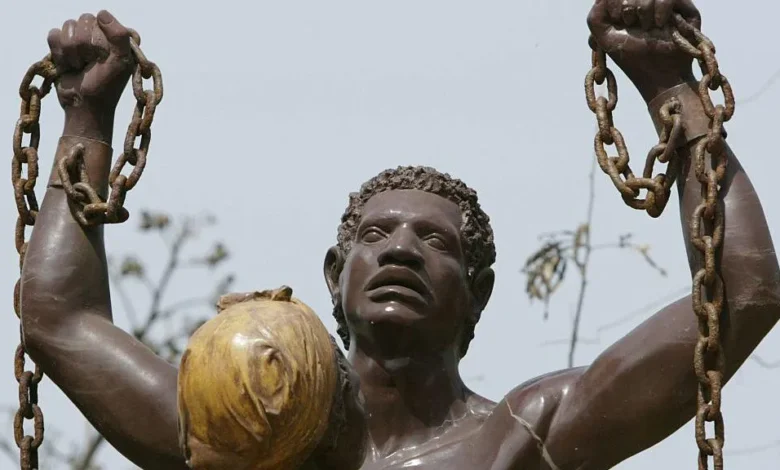
‘The gravest crime against humanity’: What does the UN vote on slavery mean?.
The United Nations General Assembly this week overwhelmingly backed a resolution declaring the transatlantic slave trade “the gravest crime against humanity”.
Welcoming the vote, UN Secretary-General Antonio Guterres said that the wealth of many Western nations was “built on stolen lives and stolen labour”.
Noting the “barbaric punishments that maintained control – from shackles and iron collars to flogging and sexual violence”, he said it “was not simply forced labour”.
“It was a machinery of mass exploitation and deliberate dehumanisation of men, women and children. The wounds run deep and often go unrecognised.”
The resolution, backed by African and Caribbean countries, is not legally binding but analysts say it sends a powerful message.
“It is already a huge and significant step in political terms to have this debate at the UN, even when it has a more symbolic value,” Almaz Teffera, a senior researcher on racism at Human Rights Watch, told the BBC.
She says it could increase the chance of progress on discussions about reparations, or some form of compensation.
The resolution was adopted by 123 votes to three, while 52 countries abstained, including the United Kingdom and EU member states.
The United States, Argentina and Israel voted against it.
Dr Erieka Bennett, who leads the Ghana-based Diaspora African Forum, told the BBC the vote had a personal meaning for the descendants of people who were enslaved, like her.
”It means that I’m acknowledged, it means that my ancestor finally rests. For me personally as an African American I’m overwhelmed – until you’ve been a part of what happened, it’s very difficult to understand what this really means.”
Countries affected by slavery have been asking for reparations for more than a century. But the debate has intensified in recent years, particularly after some nations and businesses which historically profited from African slave labour formally apologised and announced measures of atonement.
What is the case for reparations?
From the 15th to 19th Centuries, around 12-15 million African men, women and children were captured and trafficked to the Americas to work as slaves.
They were sent to colonies controlled by European countries, such as Spain, Portugal, France and the UK. Two million people are believed to have died aboard the infamous slave ships.
The effects of centuries of exploitation are still felt to this day.
In Brazil, the largest recipient of enslaved Africans – 4.9 million, mostly while it was a Portuguese colony – black people are twice as likely to live in poverty as whites, according to the country’s official statistics body (IBGE).
Reparations are intended to work as a restitution – an apology and repayment to black people whose ancestors were forced into slavery. The motion, proposed by Ghana, urges UN member states to consider apologising for the slave trade and contributing to a reparations fund.
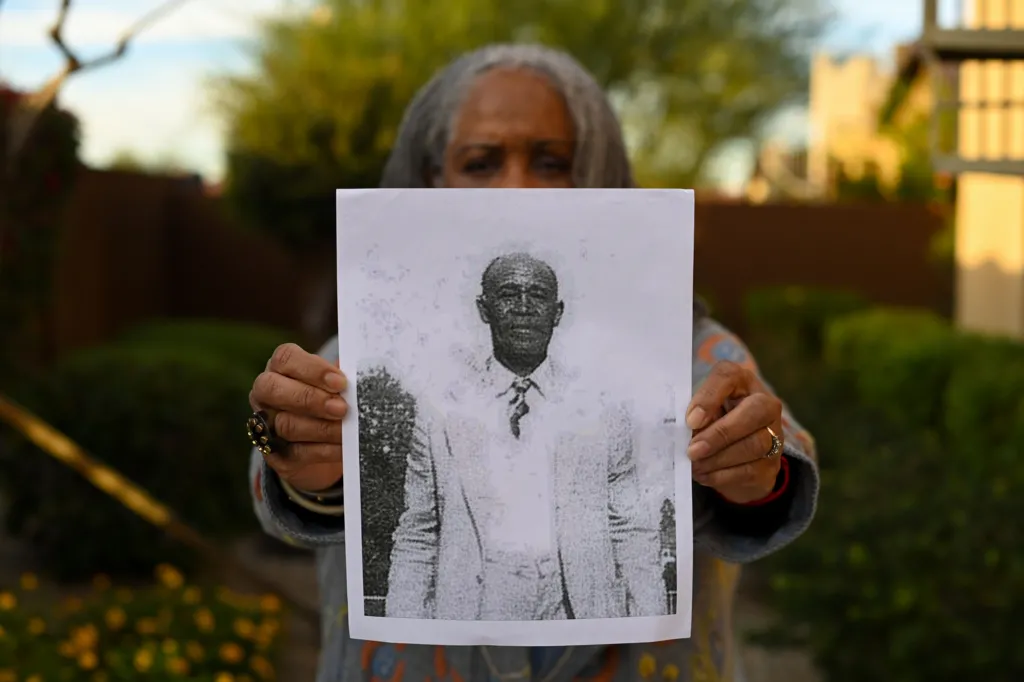
Dr Esther Xosei, a British scholar, activist and leading figure in the global reparations movement, welcomed the vote but doubts it will make much difference on its own.
“It is good victory [for the reparations movement], but let’s remember this is only a declaration of intent,” she told the BBC.
Xosei added that while it was “encouraging to see African nations taking centre stage in these discussions”, she highlighted the importance of grassroots action.
“Hearts and minds will not be won at the UN.”
“The real battle will be fought on the streets, where people are still misinformed about the history of slavery and its enduring effects on the lives of Africans and African descendants.”
Is there a historical precedent for reparations?
Yes – the most famous reparations case involves Germany. Since 1952, the European nation has paid more than $80bn (£60bn) to Jewish victims of the Nazi regime, including payments to Israel.
But so far, no country has ever paid reparations to the descendants of enslaved Africans or affected African, Caribbean and Latin American nations.
Most of the reparations paid by governments came in the form of compensation to slave owners in the 19th Century, rather than to those who had been enslaved.
That includes the UK – in the 1830s, following the abolition of slavery, the country paid owners the equivalent of more than $21bn (£16bn) in today’s money.
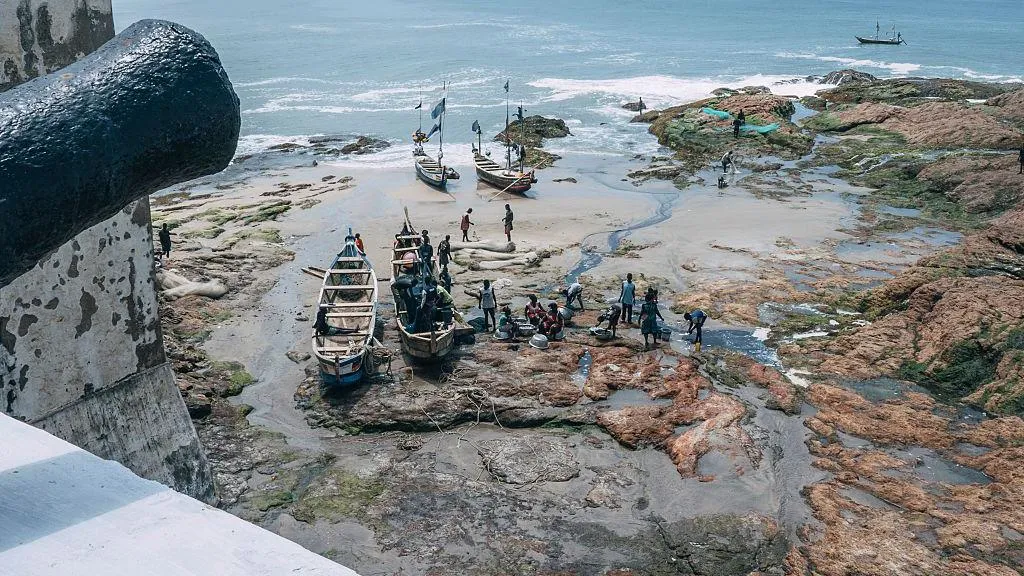
Even nations that have formally apologised for their role in slavery, such as the Netherlands in 2022, have ruled out direct financial reparations to descendants of enslaved people. The Dutch government instead established a $230m fund for “social initiatives and projects to address the legacy of slavery”.
“The most important thing to understand is that nobody is trying to change the past, but to address its consequences in the present,” explained Dr Celeste Martinez, a researcher who specialises in Spanish colonialism in Africa.
“Slavery legacies still endure today in the shape of racism and inequality. Recognising the past is crucial if we want fairer and more democratic societies.”
What are the arguments against reparations?
Opposition to reparations takes place on different levels.
One of the main arguments is that those alive today should not be held liable for the crimes of their ancestors.
Some also argue that the passage of time complicates matters in terms of identifying the descendants of the victims. Previous cases – such as payments to Holocaust victims – were resolved while many survivors, or their close relatives, were still alive.
There is also a legal debate. The US has historically refused to recognise a right to reparations because slavery was legal, and even regulated by several countries, between the 15th and 19th Centuries.
The UK, which was one of the major slaving nations before going on to lead the fight to abolish the trade, has also repeatedly ruled out paying reparations. In November 2024, the then Foreign Secretary David Lammy said during a visit to Nigeria that the concept of reparations for former colonies affected by slavery “is not about the transfer of cash”.
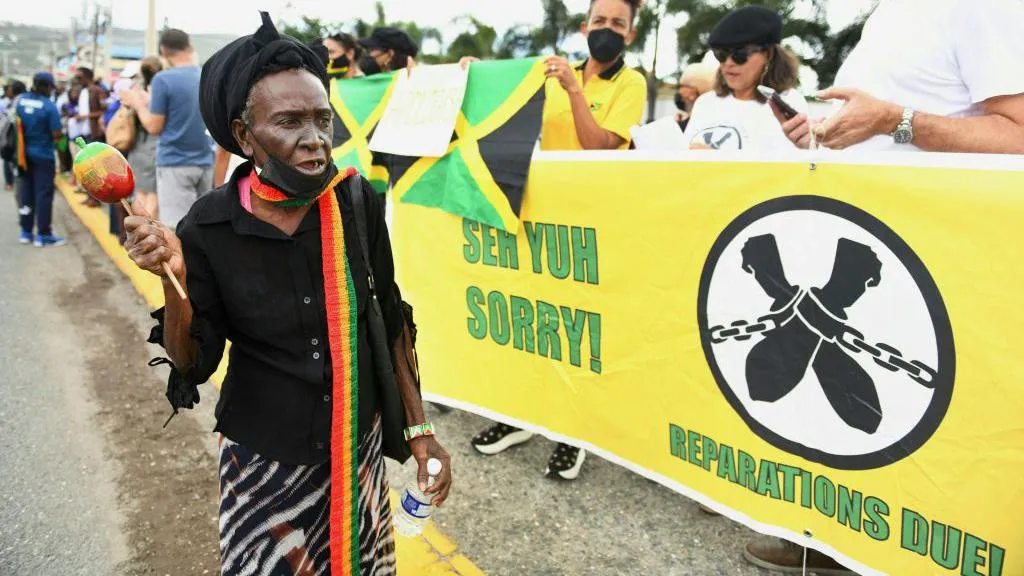
But it’s telling that even Barack Obama, America’s first black president, did not publicly pursue, propose, or endorse any reparations policy during his two terms in office. In a 2016 interview with writer and activist Ta-Nehisi Coates just weeks before leaving office, Obama revealed his belief that the country’s political system made reparations practically unworkable.
Critics have also voiced concern about the classification of African enslavement as “the gravest crime against humanity”. Deputy US ambassador to the UN Dan Negrea said at the General Assembly that Washington strongly opposed what he called an attempt to create a hierarchy for violations.
“The assertion that some crimes against humanity are less severe than others objectively diminishes the suffering of countless victims and survivors of other atrocities throughout history,” he argued.
What could the UN decision change?
The UN itself had already publicly supported reparatory justice. In a September 2025 statement, its High Commissioner for Human Rights, Volker Türk, went further, saying that such justice must include “reparations in various forms”.
However, the UN General Assembly, where all 193 member countries get one vote, had never voted or passed a resolution along these lines.
The general assembly cannot force countries to pay reparations, but it can give the cause political legitimacy and bolster the case of those arguing for reparations.
“Grassroots movements and pressure from international bodies like the UN are the reasons why many countries, some more timidly and some more decisively, have started discussing reparation policies,” said Martinez, the researcher into Spanish colonialism.
How much money are we talking about?
One of the most discussed aspects of these repairs is who should pay the bill – and how much. The UN resolution does not specify an amount.
Calls have been made for companies, institutions and families who owned slaves to pay compensation. But in most proposals, responsibility stops at the government level. In 2013, Caricom – a bloc of 15 Caribbean nations – issued its 10-point Plan for Reparatory Justice.
The proposals went from cancelling foreign debts to investing in tackling illiteracy and public health. In 2023, the bloc presented a study saying the 15 Caribbean nations were owed at least $33 trillion (£25tr) from former colonial powers.
“The state is always guilty, because it created the environment in which individuals, institutions and businesses participated in slavery and colonialism,” said Verene Shepherd, a professor at the University of the West Indies and vice-chair of the Caricom Reparations Commission.
In the same year, Patrick Robinson, a leading judge at the International Court of Justice came up with an even bigger figure – $107tr collectively owed by 31 countries, including nations like Brazil and the US, which benefitted from slave labour after becoming independent from Portugal and the UK.
These are astronomical figures that any country in the world would struggle to pay – the entire US federal budget for 2025 was $7.1tr.
