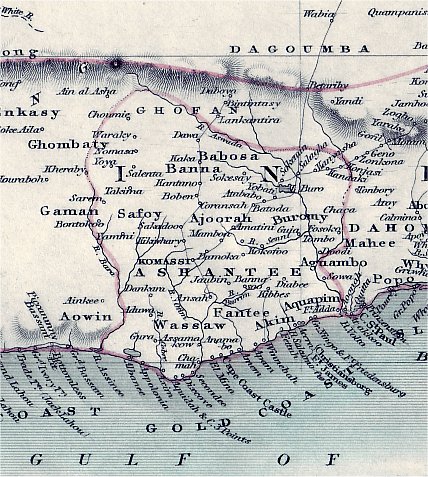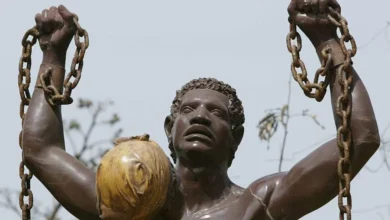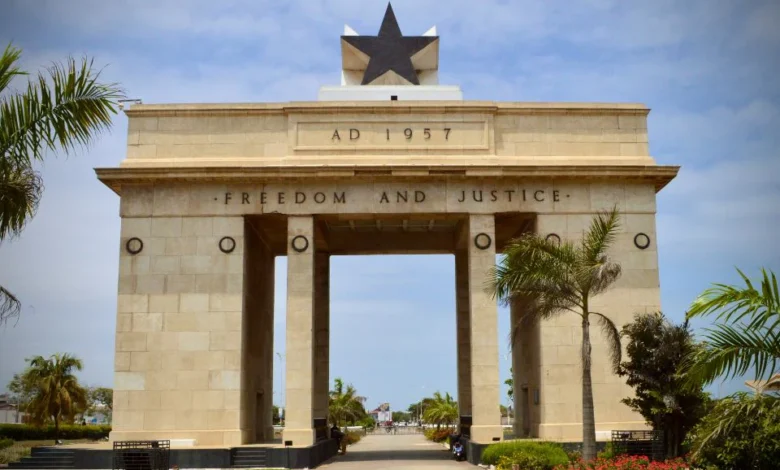
The area of the Republic of Ghana (the then Gold Coast) became known in Europe and Arabia as the Ghana Empire after the title of its Emperor, the Ghana. Geographically, the ancient Ghana Empire was approximately 500 miles (800 km) north and west of the modern state of Ghana, and controlled territories in the area of the Sénégal River and east towards the Niger rivers, in modern Senegal, Mauritania and Mali. The empire appears to have broken up following the 1076 conquest by the Almoravid General Abu-Bakr Ibn-Umar. A reduced kingdom continued to exist after Almoravid rule ended, and the kingdom was later incorporated into subsequent Sahelian empires, such as the Mali Empire. Around the same time, south of the Mali empire in present-day northern Ghana, the Kingdom of Dagbon emerged. The decentralised states ruled by the tindaamba were unified into a kingdom. Many sub-kingdoms would later arise from Dagbon including the Mossi Kingdoms of Burkina Faso and Bouna Kingdom of Ivory Coast. Dagbon pioneered Ghana’s earliest learning institutions, including a university town, and a writing system prior to European arrival.
Toward the end of the classical era, larger regional kingdoms had formed in West Africa, one of which was the Kingdom of Ghana, north of what is today the nation of Ghana. Before its fall at the beginning of the 10th century, Akans migrated southward and founded several nation-states around their matriclans, including the first empire of Bono state founded in the 11th century and for which the Brong-Ahafo (Bono Ahafo) region is named. The Mole-Dagbon people, who founded the earliest centralised political kingdoms of Ghana, migrated from Lake Chad to present-day Ghana. Later, Akan ethnic groups such as the Ashanti, Akwamu, Akyem, Fante state and others are thought to possibly have roots in the original Bono state settlement at Bono Manso. The Ashanti kingdom’s government operated first as a loose network and eventually as a centralized empire-kingdom with an advanced, highly specialized bureaucracy centred on the capital Kumasi.
Early history of Ghana
By the end of 16th century, most of the ethnic groups constituting the modern Ghanaian population had settled in their present locations. Archaeological remains found in the coastal zone indicated that the area had been inhabited since the Bronze Age (ca. 2000 BC), but these societies, based on fishing, had left few traces. Archaeological work also suggests that central Ghana north of the forest zone was inhabited as early as 3,000 to 4,000 years ago.
These migrations resulted in part from the formation and disintegration of a series of large states in the western Sudan (the region north of modern Ghana drained by the Niger River). Strictly speaking, Ghana was the title of the king, but the Arabs, who left records of the kingdom, applied the term to the King, the capital, and the state. The 9th-century Berber historian and geographer Al Yaqubi described ancient Ghana as one of the three most organized states in the region.
Its rulers were renowned for their wealth in gold, the opulence of their courts, and their warrior/hunting skills. They were also masters of the trade in gold, which drew North African merchants to the western Sudan. The military achievements of these and later western Sudanic rulers, and their control over the region’s gold mines, constituted the nexus of their historical relations with merchants and rulers in North Africa and the Mediterranean.
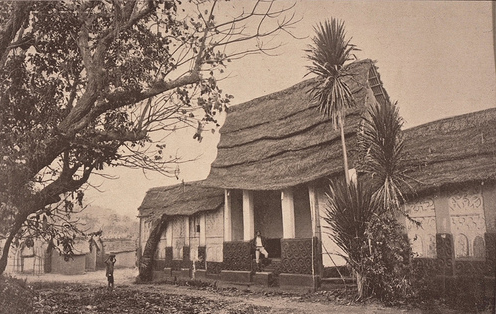
Palace of Ashanti King Kwaku Dua of Kumasi, Kumasi, 1887
Ghana succumbed to attacks by its neighbors in the 11th century, but its name and reputation endured. Although none of the states of the western Sudan controlled territories in the area that is modern Ghana, several kingdoms that later developed such as Bonoman, were ruled by nobles believed to have immigrated from that region. The trans-Saharan trade that contributed to the expansion of kingdoms in the western Sudan also led to the development of contacts with regions in northern modern Ghana, and in the forest to the south.
The growth of trade stimulated the development of early Akan states located on the trade route to the goldfields, in the forest zone of the south. The forest itself was thinly populated, but Akan-speaking peoples began to move into it toward the end of the 15th century, with the arrival of crops from South-east Asia and the New World that could be adapted to forest conditions. These new crops included sorghum, bananas, and cassava. By the beginning of the 16th century, European sources noted the existence of the gold-rich states of Akan and Twifu in the Ofin River Valley.
The Mole-Dagbon Kingdoms are the earliest political kingdoms of Modern Ghana. Found by Naa Gbewaa, numerous kingdoms such as the Kingdom of Dagbon, Gmamprugu, Nanung and others emerged. These kingdoms are spread across the Upper East Region, Upper West Region, North East Region, Ghana, and Northern Region (Ghana) of Ghana. The Kingdom of Dagbon resisted slavery and colonisation fiercely, preferring trade in commodities than humans. As a result, the Kingdom has been significantly influenced by Islam due to trade with neighbouring Kingdoms under the rulership of Yaa Naa Zangina. European and colonial influence was more in Southern and Central Ghana.
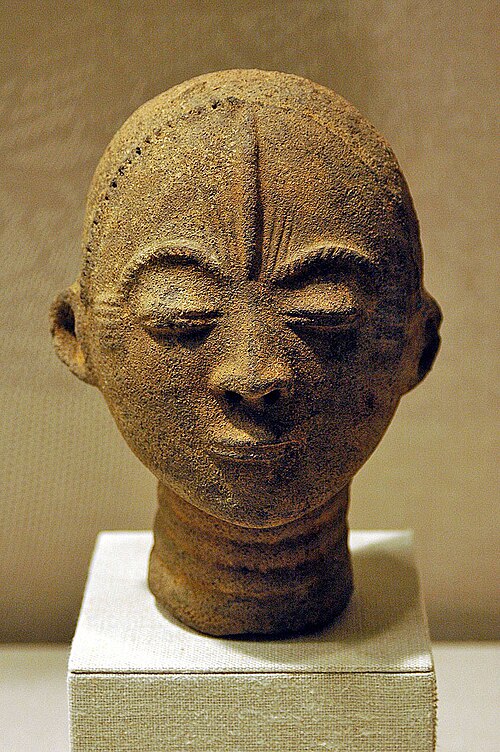
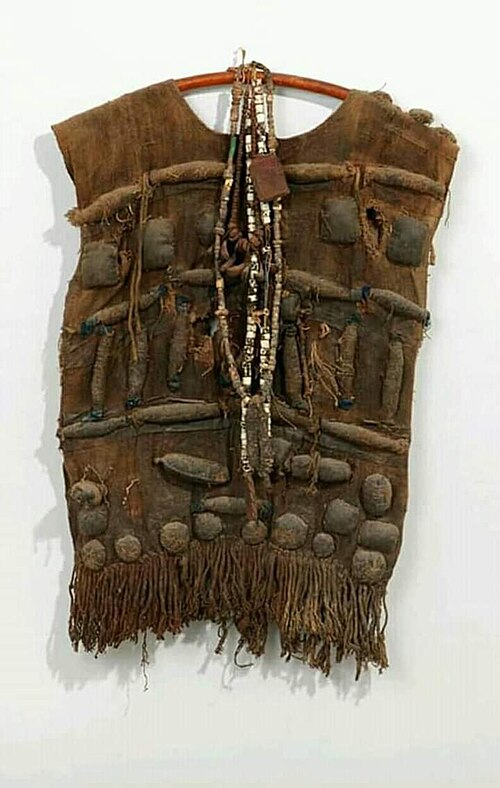
Kingdom of Dagbon
According to oral traditions and archaeological evidence, the Dagomba states were the earliest kingdoms to emerge in present-day Ghana as early as the 11th century, being well established by the close of the 16th century. Although the rulers of the Dagomba states were not usually Muslim, they brought with them, or welcomed, Muslims as scribes and medicine men. As a result of their presence, Islam influenced the north and Muslim influence spread by the activities of merchants and clerics.
In the broad belt of rugged country between the northern boundaries of the Muslim-influenced state of Dagomba, and the southernmost outposts of the Mossi Kingdoms (of present-day northern Ghana and southern Burkina Faso), were peoples who were not incorporated into the Dagomba entity. Among these peoples were the Kassena agriculturalists. They lived in a so-called segmented society, bound together by kinship tie, and ruled by the head of their clan. Trade between Akan kingdoms and the Mossi kingdoms to the north flowed through their homeland, subjecting them to Islamic influence, and to the depredations of those more powerful.
Bono State
Bono State (or Bonoman) was a trading state created by the Bono people, located in what is now southern Ghana. They were Twi-speaking Akan Group. It was founded sometime around the eleventh century. Bonoman was a medieval Akan kingdom in what is now Bono, Bono East and Ahafo — regions respectively named after Bono, Ahafo and Eastern Ivory Coast. It is generally accepted as the origin of the subgroups of the Akan people who migrated out of the state at various times to create new Akan states in search of gold. The gold trade, which started to boom in Bonoman as early in the 12th century, was the genesis of Akan power and wealth in the region, beginning in the Middle Ages. Various aspects of Akan culture stem from the Bono state, including the umbrella used for the kings, the swords of the nation, the stools or thrones, goldsmithing, blacksmithing, Kente Cloth weaving, and goldweighing.
Ashanti Empire
Under Chief Oti Akenten (r. ca. 1630–60), a series of successful military operations against neighboring Akan states brought a larger surrounding territory into alliance with Ashanti. At the end of the 17th century, Osei Tutu became Asantehene (king of Ashanti). Under Osei Tutu’s rule, the confederacy of Ashanti states was transformed into an empire with its capital at Kumasi. Political and military consolidation ensued, resulting in firmly established centralized authority.
Osei Tutu was strongly influenced by the high priest, Anokye, who, tradition asserts, caused a stool of gold to descend from the sky to seal the union of Ashanti states. Stools already functioned as traditional symbols of chieftainship, but the Golden Stool represented the united spirit of all the allied states and established a dual allegiance that superimposed the confederacy over the individual component states. The Golden Stool remains a respected national symbol of the traditional past and figures extensively in Ashanti ritual.
Osei Tutu permitted newly conquered territories that joined the confederation to retain their own customs and chiefs, who were given seats on the Ashanti state council. Tutu’s gesture made the process relatively easy and nondisruptive, because most of the earlier conquests had subjugated other Akan peoples. Within the Ashanti portions of the confederacy, each minor state continued to exercise internal self-rule, and its chief jealously guarded the state’s prerogatives against encroachment by the central authority. A strong unity developed, however, as the various communities subordinated their individual interests to central authority in matters of national concern.
By the mid-18th century, Ashanti was a highly organized state. The wars of expansion that brought the northern states of Dagomba, Mamprusi, and Gonja under Ashanti influence were won during the reign of Opoku Ware I (died 1750), successor to Osei Kofi Tutu I. By the 1820s, successive rulers had extended Ashanti boundaries southward. Although the northern expansions linked Ashanti with trade networks across the desert and in Hausaland to the east, movements into the south brought the Ashanti into contact, sometimes antagonistic, with the coastal Fante, as well as with the various European merchants whose fortresses dotted the Gold Coast.