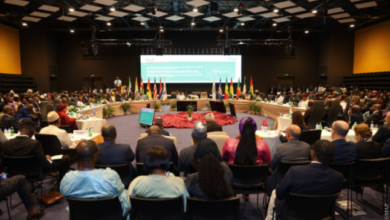
Children fail due to perceived difficult learning systems
Children fail due to perceived difficult learning systems — Africa Dyslexia Organisation

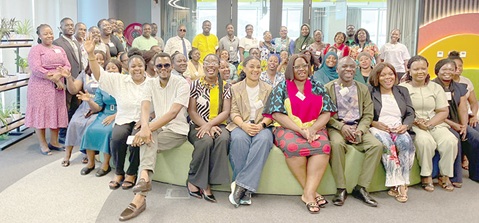
“Children do not fail because they cannot learn.
Many fail because they do not understand the system used to teach them,” the Founder and Executive Director of Africa Dyslexia Organisation (ADO), Rosalin Abigail Kyere-Nartey, has observed.
She said it was, therefore, the responsibility of all, including teachers, to change the narrative.
Mrs Kyere-Nartey said this at the opening of a two-day in-person training in Accra last Wednesday.
The event, “Leaving No Child Behind II: Dyslexia and Assistive Technology Training” programme, brought together teachers from public and low-fee private basic schools within the La Nkwantanang–Madina Municipality for an intensive practical training focused on dyslexia, inclusive education, foundational literacy, multisensory teaching approaches, and assistive technology integration in classrooms.
Struggle
The training, through the support of KGL Foundation, seeks to change the narrative by equipping teachers with practical, evidence-based strategies to better identify and support learners who struggle with reading, spelling, writing, processing, memory, and classroom participation.
The programme includes practical demonstrations of multisensory teaching strategies and classroom-based dyslexia support and forms part of a broader effort to strengthen inclusive education and improve foundational literacy outcomes for vulnerable learners within Ghana’s education system.
Mrs Kyere-Nartey noted that training was part of a much larger 10-month journey focused on strengthening teacher capacity, deepening inclusive education practice, and ensuring that learners who struggle silently in classrooms were no longer overlooked.
“Across Ghana and many parts of Africa, there are thousands of children sitting in classrooms every single day who are intelligent, creative, capable, and full of potential, yet they continue to struggle with reading, writing, spelling, processing, participation, and confidence.
“Too often, these children are misunderstood, labelled, punished, ignored, or left behind simply because the education system has not adequately prepared teachers to identify and support them.
That is why this programme matters,” she said.
The initiative, Mrs Kyere-Nartey said, was not built around awareness alone, but it was built around practical action, classroom implementation, mentorship, and long-term support.
“Over the next 10 months, we are not only training teachers.
We are building a stronger ecosystem of inclusive educators who can identify challenges early, respond appropriately, and create classrooms where every learner has the opportunity to succeed,” she said.
She thanked Google and the KGL Foundation for partnering with ADO to make the initiative possible.
The La Nkwantanang–Madina Municipal Director of Education, Philip Aidoo, told the participants that the training would not only be beneficial to themselves, but their families and children under their care.
He said that until educators and teachers were given the requisite knowledge on the condition, they won’t be able to know how effectively they should handle such children who have their own peculiar God-given talents,” he said, and that “We have to make sure that all of them are brought on board”
Support
The Public Relations Manager of the KGL Foundation, Edwin Osmond-Lamptey, said the organisation had partnered with ADO over the past two years to understand the challenges and mitigate the myths surrounding dyslexia.
The training, he said, was essential to understanding what the condition was and “we want people to understand that this is not a societal problem.
Anyone can have it” Inclusion Lead of ADO, Justina Asafu-Adjaye, who had trained teachers and students for over two decades, said the biggest barrier she had encountered during the period was attitude.
“If you have an attitude where you don’t feel there is anything left for you to learn because you know everything, then it is very hard for you to look at how you can adapt and change to meet the needs of the children,” she emphasised.