For two years, Ghanaians watched the cedi bleed so badly, as the then government suffered unending, brutal criticism.
Every morning, the forex bureaus posted a new, worse rate, and the blame game was also on. We blamed speculators. We blamed the Bank of Ghana. We blamed the Finance Minister. And we blamed government for “mismanaging” the economy.
We were wrong. Or at least, we didn’t know the full truth.
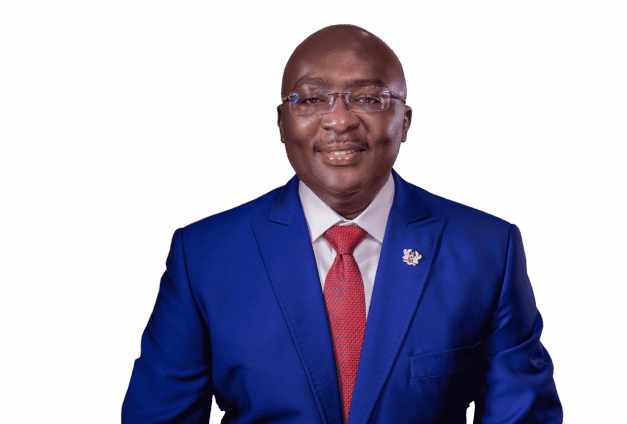
Former Vice President Dr. Mahamudu Bawumia has finally told us what really happened. And it is a revelation every Ghanaian, especially those not familiar with the nitty-gritty of top-level economic management, must hear.
Speaking to small-scale miners last Thursday, Dr. Bawumia disclosed the hidden handcuff in Ghana’s IMF programme: a startling revelation that the Bank of Ghana was banned from intervening in the forex market with more than $80 million a month by the IMF, under the programme Ghana signed up to.
Read that again! Only $80 million! Yes, for a whole country to manage its forex.
That is $960 million for an entire year, while Ghana’s monthly import bill for fuel, machinery, medicines, rice, cooking oil and everything we don’t produce is more than three times that.
It was economics 101, as Dr. Bawumia himself put it: when demand far exceeds supply, price must go up. With huge demand chasing the few dollars available, the dollar surely had to go up. And the cedi surely had to fall, almost on a weekly basis.
The IMF’s logic was not wicked. The IMF wanted Ghana to build reserves, rather than spending dollars to defend the cedi and save them instead.
On paper, it made sense, but in reality, it created artificial scarcity and panic, leading to a significant fall of the cedi. The Bank of Ghana had its hands tied behind its back, while the cedi was being beaten.
With the cedi down, reserves depleted and the international capital market closed to Ghana, an extraordinary intervention was needed to avert a very serious crisis.
So Dr. Bawumia proposed two ideas he says you will not find in any economics textbook: Gold-for-Oil and Gold-for-Reserves (Domestic Gold Purchase Programme).
The first was simple: if we don’t have dollars to buy fuel, let’s trade what we have (gold) directly for oil. The proposal bypassed the broken dollar market entirely and kept our pumps from running dry.
The second idea is the masterstroke.
While exercising one morning, Dr. Bawumia said, he asked a question that should have been asked 65 years ago: Why does Ghana, the largest gold producer in Africa, have only 8.7 tons of gold reserves while countries that produce no gold have thousands of tons? Why must we export cocoa to get dollars to use as reserves, when we dig gold from our own soil every day?
Why not buy that gold with cedis?, he asked himself.
The idea sounded crazy at the time. Even the Bank of Ghana thought so. Dr. Bawumia admits it took them nearly a year of due diligence because they feared getting into trouble for doing something so unorthodox.
But they did it and it worked.
In two years, Ghana bought $5 billion worth of gold, grew reserves from 8.7 tons to over 31 tons, and built the very buffer the IMF wanted.
And because of that gold, the IMF removed the $80m restriction in January 2025.
Today, the Bank of Ghana can inject over $1 billion a month* into the market. From $80 million a month to $1 billion a month. From struggling to do $1 billion a year to doing $1 billion a month!
That is the real foundation of the stability we are enjoying today. It is not magic. It is not luck. It is gold.
The lesson is profound. Sometimes, to save an economy, you must throw the textbook away, as Dr. Bawumia brilliantly did for Ghana.
The orthodox path — sitting and watching the cedi depreciate because the IMF says you can only spend $80m — would have collapsed this country.
Indeed, it took out-of-the-box thinking, anchored in our own resources, to break the straightjacket.
We owe it to ourselves to remember Dr. Bawumia and this history correctly.