West African governments urged to strengthen preparations for potential impacts
El Niño: West African governments urged to prepare for food and health threats

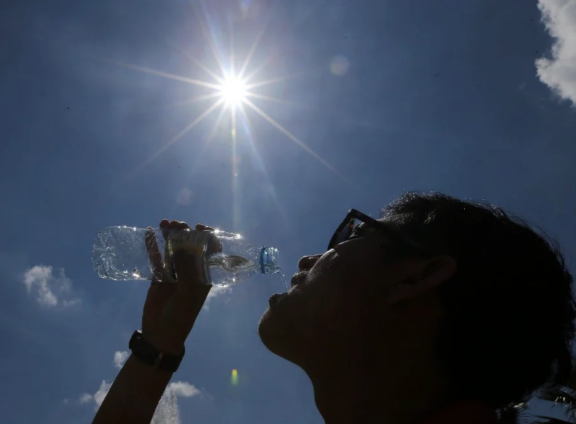
West African governments have been urged to strengthen preparations for the potential impacts of the 2026–2027 El Niño event, amid concerns that changing rainfall patterns and rising temperatures could put food production, water supplies and public health under pressure.
Climate and public-health specialists say delayed rainfall and prolonged dry spells could disrupt farming activities, particularly among farmers who depend on rain-fed agriculture and have limited access to irrigation.
The warnings come as countries across the region are being encouraged to strengthen early-warning systems, food reserves and emergency health preparedness before the potential impacts materialise.
Speaking at a virtual expert discussion organised by the West African Journalists for Environment, Science, Health and Agriculture (WAJESHA), climate scientist Dr Caleb Mensah warned that the interval between early rainfall events could be long enough to affect crop establishment.
“The interval between the first and second rainfall events could extend to two or three weeks,” said Dr Mensah, a Senior Lecturer at the University of Energy and Natural Resources (UENR).
Such a gap could create difficulties for farmers who plant in response to the first rains, particularly if subsequent rainfall is insufficient to support crop growth.
Dr Mensah said farmers could struggle to achieve their usual production levels if rainfall is delayed or inadequate while temperatures remain high.
The consequences could extend beyond individual farms, putting additional pressure on food availability and the movement of agricultural produce to markets.
Farmers’ access to drought-resistant seeds remains a concern
Although agricultural research institutions have developed crop varieties capable of tolerating drought conditions for longer periods, Dr Mensah said access remained an important consideration.
He pointed to drought-tolerant seed varieties developed by the Council for Scientific and Industrial Research (CSIR), but questioned how widely farmers could obtain them.
“The CSIR has developed seed varieties that can withstand drought for longer periods. The question is how many farmers will have access to these seeds,” he said.
He also raised concerns about agricultural pests, including termites, army ants and other insects, which may thrive under high-temperature and low-water conditions.
Agricultural experts, he said, would need to identify appropriate control measures and ensure farmers had the resources to respond.
The potential consequences of reduced rainfall could also affect water resources and electricity generation.
Dr Mensah said lower-than-expected rainfall could affect hydrological systems, including water inflows into the Volta and Lower Volta systems.
For Ghana, where hydroelectricity is an important part of the energy mix, reduced inflows could create additional pressure on electricity generation.
However, he stressed that the scale of the impact would depend partly on the preparedness measures taken by governments and other stakeholders.
“The extent of the impact will depend on the measures we put in place. That is why our efforts must begin now,” he said.
WHO warns countries are not fully prepared
Beyond agriculture and water, health specialists are warning that climate-related hazards could place additional demands on already vulnerable health systems.
Dr Patrick Otim, Programme Area Manager for Emergency Response at the World Health Organization’s Regional Office for Africa, described El Niño as a risk modifier, explaining that its health consequences would depend on the hazards experienced, existing vulnerabilities and the capacity of health systems to respond.
Potential health concerns include heat-related illnesses, malnutrition linked to food insecurity, and waterborne, foodborne and vector-borne diseases.
Floods and landslides could also cause injuries and deaths, damage health facilities and interrupt access to essential healthcare.
Dr Otim said the WHO had been issuing early-warning alerts to member states and encouraging governments to take appropriate preparedness measures.
He disclosed that the organisation had classified the event at Grade 3 under its internal three-level emergency grading system, the highest level.
The WHO was also supporting 18 countries with readiness assessments to identify gaps in their emergency response capacities.
“I do not think any country in West Africa is fully prepared to deal with this,” Dr Otim said.
He identified inadequate food storage and limited national food reserves as major preparedness concerns.
According to him, governments need to consider how to strengthen food reserves and provide basic social support to vulnerable populations who could face severe food insecurity following crop failure.
He called for a coordinated, whole-of-government response involving the health, agriculture, water and disaster-management sectors.
Such preparations, he said, should include contingency plans, risk maps, identification of high-risk communities and the pre-positioning of essential supplies before emergencies occur.
He also urged countries to strengthen health alerts, nutrition screening and disease surveillance while ensuring that essential health services remain operational.
Meningitis surveillance among health priorities
Dry conditions could also increase concerns about meningitis, particularly in countries within Africa’s meningitis belt.
Dr Otim noted that Ghana lies within the meningitis belt and stressed the importance of effective surveillance to identify suspected cases, confirm the bacteria responsible and guide an appropriate response, including vaccination where necessary.
“Effective surveillance is essential for detecting the first cases and enabling a timely response,” he said.
He urged people experiencing symptoms such as headaches, neck pain or neck stiffness to seek medical attention promptly for assessment and confirmation.
The WHO official also highlighted the need to protect communities with limited access to healthcare.
He said risk assessments and vulnerability mapping should help authorities identify populations requiring additional support, including displaced people, residents of peri-urban communities and people living in urban settlements with inadequate housing.
Mobile health services, outreach programmes and temporary clinics could help bring healthcare closer to vulnerable populations, particularly in areas expected to face climate-related hazards.
However, he stressed that such interventions would require advance planning, adequate resources, equipment and trained personnel.
Journalists urged to turn climate warnings into practical information
The experts also highlighted the role of the media in ensuring that early warnings translate into practical action at community level.
Dr Otim said journalists needed to move beyond technical explanations of climate phenomena and communicate what potential risks could mean for people’s everyday lives.
He encouraged the use of local languages where appropriate and called for reporting that provides practical guidance on safe water, mosquito nets, protection from heat, access to medical care and emergency preparedness.
“The next step is to take this information to communities and make it local and actionable,” he said.
However, he cautioned against sensational reporting that could create unnecessary public anxiety.
“It is important to inform the public without creating panic. Informing without alarming is key,” Dr Otim said.
The discussion was held during the third edition of WAJESHA’s Expert Knowledge Exchange Series, under the theme El Niño 2026–2027: Understanding Its Implications for Ghana and West Africa.
The initiative brings journalists and specialists together to strengthen public understanding and improve reporting on environmental, climate, science, health and agricultural issues.