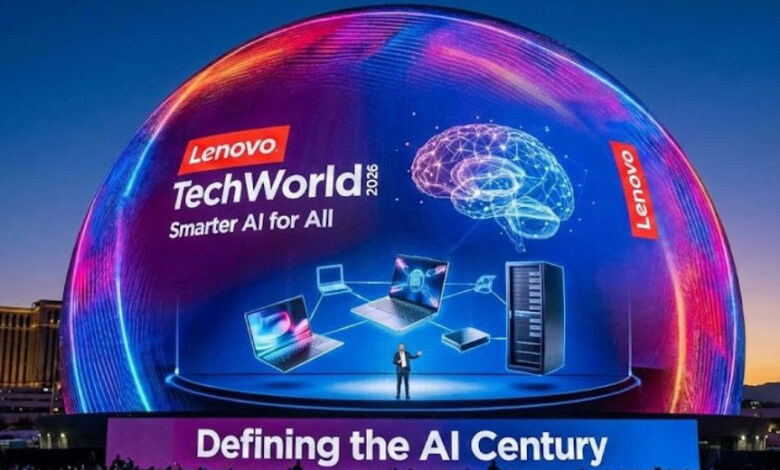
Walking out of the Las Vegas Sphere after Lenovo’s Tech World event last Tuesday at CES, the contrast was jarring. Inside, I witnessed a cohesive, immersive roadmap for the next five years of the AI era. Outside, on the CES show floor, the rest of the industry seems stuck in a loop of incrementalism — pitching slightly faster gadgets and “smart” toasters with little thought to the ecosystem they inhabit.
For years, CES has devolved into a bazaar of disparate specs. Vendors arrive with their Q1 SKUs, hoping to move units, but utterly failing to articulate where the industry is actually going. Tuesday night, Lenovo shattered that mold. By taking over the Sphere, they didn’t just buy the biggest screen in Vegas; they used it to project a vision that rivals the industry-defining keynotes of the 90s, when Microsoft and Intel (Wintel) dictated the future of personal computing.
Lenovo has effectively taken that mantle. While other OEMs are waiting for silicon providers to tell them what to build, Lenovo is defining the architecture of the AI century — from the pocket to the cloud — and dragging the rest of the industry along with them.
While others pitch AI products they barely seem to understand or use themselves, Lenovo is showcasing solutions they are aggressively using themselves, and it shows. One observation, during their event: they had a talented female soccer (football) player performing some amazing things to the song “Golden” from KPop Demon Hunters. I think they should have instead chosen the song “This Is How It’s Done” because what they did at CES 2026 was very much how it should be done.
This week, let’s unpack how Lenovo used CES to present a cohesive AI roadmap — one that spans devices, infrastructure, and orchestration — and why that kind of end-to-end thinking now matters more than ever. We’ll close with my Product of the Week, a personal AI concept that hits much closer to home.
The IBM Parallel: A Return to Holistic Leadership
The breadth of Lenovo’s presentation was staggering, covering everything from rollable concept PCs to liquid-cooled AI factories. This comprehensive approach draws a striking historical parallel with IBM at its peak. When IBM was the undisputed world technology leader, they didn’t just sell you a mainframe; they sold you the infrastructure, the software, the terminal, and the service to make it all work.
Lenovo is aggressively positioning itself as the Big Blue of the AI age. They are no longer just a box mover; they are an outcome provider. Whether it is the new Legion Pro Rollable concept or the enterprise-grade ThinkSystem servers, the message was clear: they own the entire stack. This end-to-end control allows them to optimize for “Smarter AI for All” in a way that fragmented competitors simply cannot match.
Solving the Data Center Energy Crisis with Neptune
One of the most critical issues facing our industry is the insatiable power appetite of generative AI. While other vendors at CES are waving their hands at “2040 sustainability goals,” Lenovo put actual hardware on stage that solves the problem today.
They showcased their 6th Generation Neptune liquid-cooling technology, a solution that is miles ahead of the air-cooled legacy systems clogging up competitors’ booths.
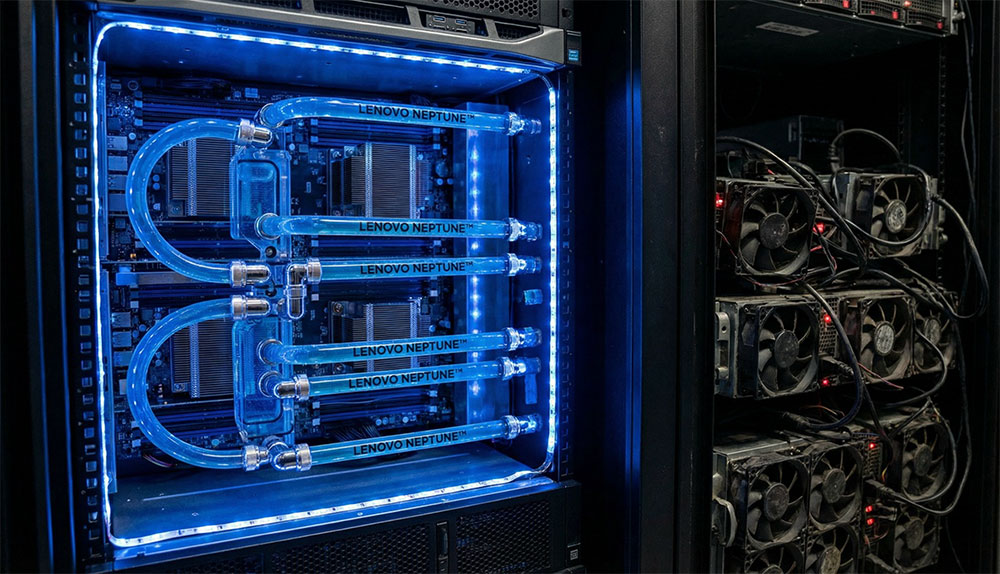
As AI models grow exponentially, traditional cooling is hitting a thermodynamic wall. Lenovo’s Neptune tech allows for massive density and performance without melting the grid. By integrating this advanced liquid cooling directly into their AI infrastructure, they are providing a lifeline to data centers facing regulatory caps and energy shortages. This is the difference between pitching a product and solving a global infrastructure crisis.
Personal Tech Reimagined: From Wrists to Rollables
While the infrastructure story was compelling, Lenovo didn’t neglect the personal devices that act as our interface to this new intelligence. Unlike the “slab updates” seen elsewhere at CES, Lenovo’s prototypes and new products felt genuinely adaptive.
The star of the show was the ThinkBook Auto Twist AI PC. Originally a concept, this is now a shipping product (arriving June 2026) that fundamentally changes how we interact with a laptop. It features a motorized hinge that automatically rotates the screen to face you as you move around the room.
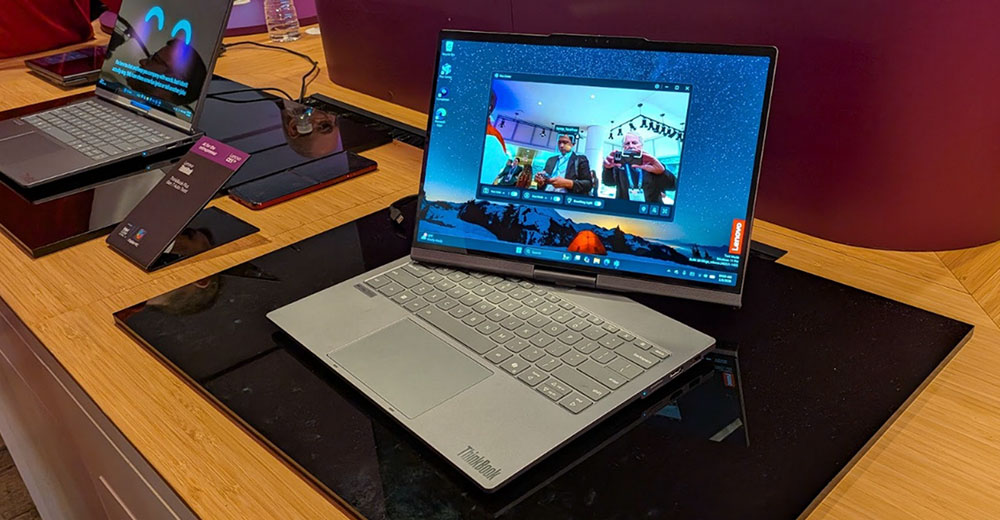
For presenters and hybrid workers, this is a game-changer. It solves the “static camera” problem without requiring a dedicated cameraman. Even better, when you leave your desk, the laptop automatically closes its lid to secure your data physically. It’s a level of robotic utility we haven’t seen in PCs before.
On the mobile front, Motorola expanded its foldable dominance with the Razr Fold — its first “book-style” foldable to complement the flip-style Razr. I carry the Pixel 10 Fold, but it is clearly inferior to this new phone with less capable cameras (this new phone has 50 megapixel cameras) and no Qualcomm Snapdragon processor (Snapdragon provides better image quality and sound).
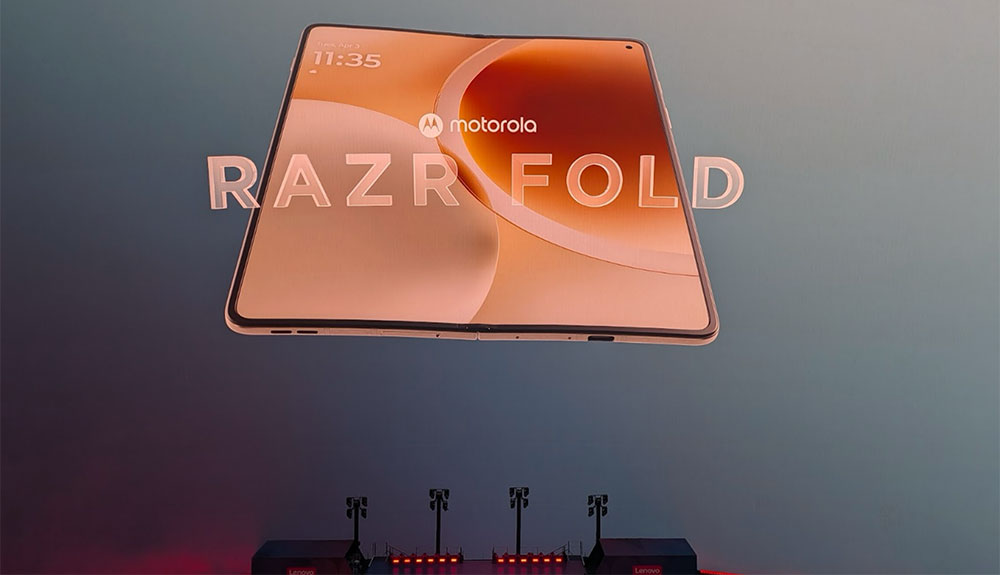
With an 8.1-inch internal canvas, this device finally bridges the gap between phone and tablet, leveraging Lenovo’s Smart Connect software to hand off tasks seamlessly to your PC. It’s not just a bigger screen; it’s a dedicated workspace that folds into your pocket.
Finally, the Legion Pro Rollable concept drew gasps from the crowd. We’ve seen rollable TVs, but applying this to a gaming laptop is brilliant. The screen physically unrolls from a standard 16:9 aspect ratio to an ultra-wide 24:9 at the touch of a button.
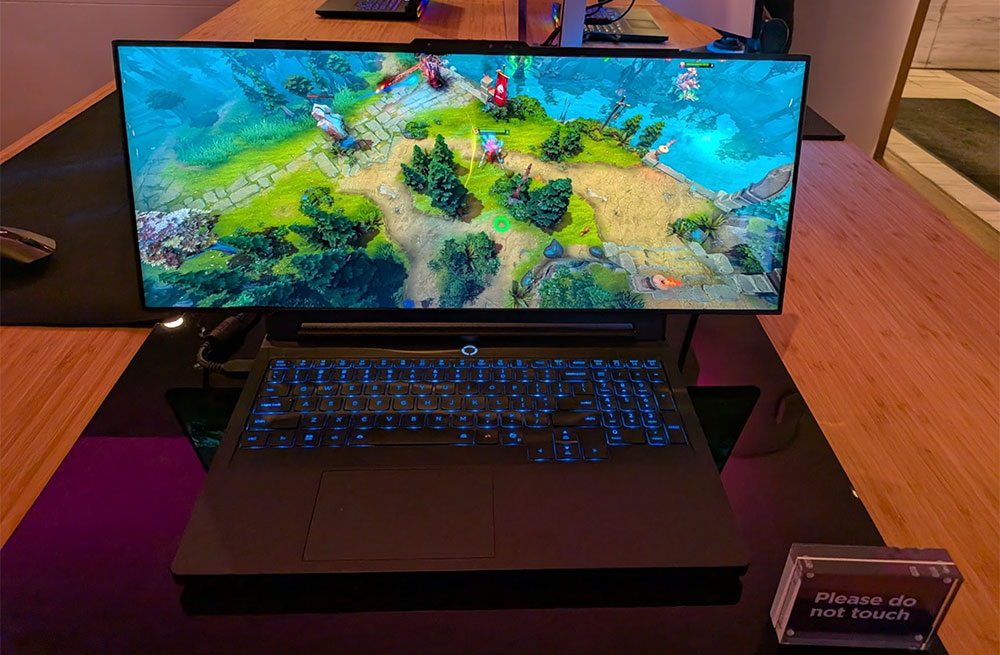
This gives gamers and data analysts the immersion of a desktop monitor setup in a form factor that still fits in a backpack. It highlights Lenovo’s willingness to experiment with form factors that others are too timid to touch.
Flipping the Script on Silicon Valley
For the last two decades, the power dynamic in tech has been top-down: Intel or Nvidia released a chip, and the OEMs built a box around it. Lenovo is flipping this script.
Throughout the Tech World presentation, it became evident that Lenovo is moving from an integrator to an architect. By defining the user experience — like the Auto Twist’s motorized needs or the Rollable’s power requirements — first, they are beginning to force component providers to build to Lenovo’s specifications. This mirrors how IBM once dictated terms to its suppliers.
The ‘Super Agent’ Overlay: Why Orchestration is King
Perhaps the most disruptive announcement was Lenovo Qira (and the broader AI Now ecosystem), their vision for a unified AI orchestration layer.
Currently, using AI is a fragmented mess. You go to ChatGPT for text, Midjourney for images, and maybe a local model for private data. It’s clunky. Lenovo’s approach is to build an “AI Super Agent” that sits above these models.
This orchestration layer dynamically chooses the best engine for the task. If you ask for a summary of a confidential financial report, the system intelligently routes it to the local NPU on your ThinkPad to protect privacy. If you ask for a travel itinerary, it routes it to a public cloud model.
This is unique in the market. It moves the user relationship away from the model provider (like OpenAI) and anchors it to the device provider (Lenovo). It is exactly what users want: they don’t care which AI does the work, they just want the result. By owning the orchestration layer, Lenovo makes itself the gatekeeper of the AI experience.
Wrapping Up
Lenovo’s event at the Sphere was a masterclass in corporate strategy. While the rest of CES 2026 feels like a noisy flea market of disconnected gadgets, Lenovo presented a unified theory of computing.
By addressing the energy crisis with Neptune, reinventing personal form factors with the Auto Twist and Razr Fold, and solving AI usability fragmentation with their orchestration layer, they have arguably cemented themselves as the singular leader in AI solutions. Lenovo is not just participating in the AI revolution; it’s engineering it.