We’ll support W/Africa achieve European model — Ambassador.
The EU Ambassador to Ghana, Rune Skinnebach, has said that the success story of European integration is a model the union seeks to support Ghana and the wider West African sub-region achieve.
He said in an increasingly interdependent world, middle powers such as the EU and Ghana, which shared common principles, must partner and stand together.
The ambassador added that Ghana remained the EU’s preferred partner in West Africa, for which the union would continue to support the country’s development, security, trade and regional integration under a Global Gateway Investment Package.
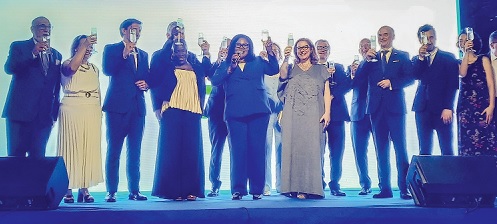
He was speaking at the Europe Day celebration held in Accra. The event marked the EU’s 50th anniversary in Ghana, and the 76th anniversary of the 1950 Schuman Declaration, which laid the foundation for European integration and peace after the Second World War. It was graced by members of the diplomatic corps and government officials.
Vision
Mr Skinnebach said the union’s vision of ending conflicts and rebuilding Europe based on economic growth, democracy and human rights remained relevant globally.
“For over four years, the Russian war of aggression against Ukraine has reminded us of the importance of peace, stability and international law, and of why we must defend Europe.
“It has reminded us of why we must build partnerships to uphold those values and those principles,” he said.
EU-Ghana relations
The ambassador further said that the EU had been present in Ghana for over 50 years now, and remained the country’s number one development and security partner, investor and export market.
“EU may not be the perfect partner, nor the most agile, but we are reliable. We do not engage in luring young Ghanaian men to fight in wars of aggression that do not concern them, nor in destabilising activities in neighbouring countries,” he said.
Mr Skinnebach added that the EU did not introduce tariffs arbitrarily, halt development programmes overnight, or engage in unsustainable and illegal fishing and mining activities.
He said Ghana was well-positioned to benefit from the EU’s Global Gateway Investment Package for Africa, where €150 billion had been earmarked for the continent.
The ambassador said over €1 billion had already been allocated to Ghana, with more in the pipeline.
The fund is to support sustainable investments in production facilities and value chains, transport infrastructure, energy, digitalisation, education, skills development, legal frameworks, anti-corruption efforts, predictable tax regimes and macroeconomic stability.
The ambassador announced that the EU and Ghana would hold a Partnership Dialogue on June 11, 2026, to discuss ways to deepen cooperation.
The Minister of Gender, Children and Social Protection, Dr Agnes Naa Momo Lartey, commended the EU over its five decades of partnership with Ghana.
She described the EU-Ghana relationship as one built on trust, shared values and mutual respect.
The minister added that the country’s commitment to peace and regional integration aligned with the EU’s foundational ideals, making the partnership both natural and strategic.
She said investments in sustainable infrastructure, renewable energy, digital transformation, education and skills development were critical to Ghana’s long-term vision of building a resilient and inclusive society.
“We see the EU not only as a partner in development, but also a partner for our progress, one that supports Ghana’s ambition to move beyond aid towards trade and investment-led growth,” the minister said.